Chiara Zisler successfully defended her dissertation. Congratulations!
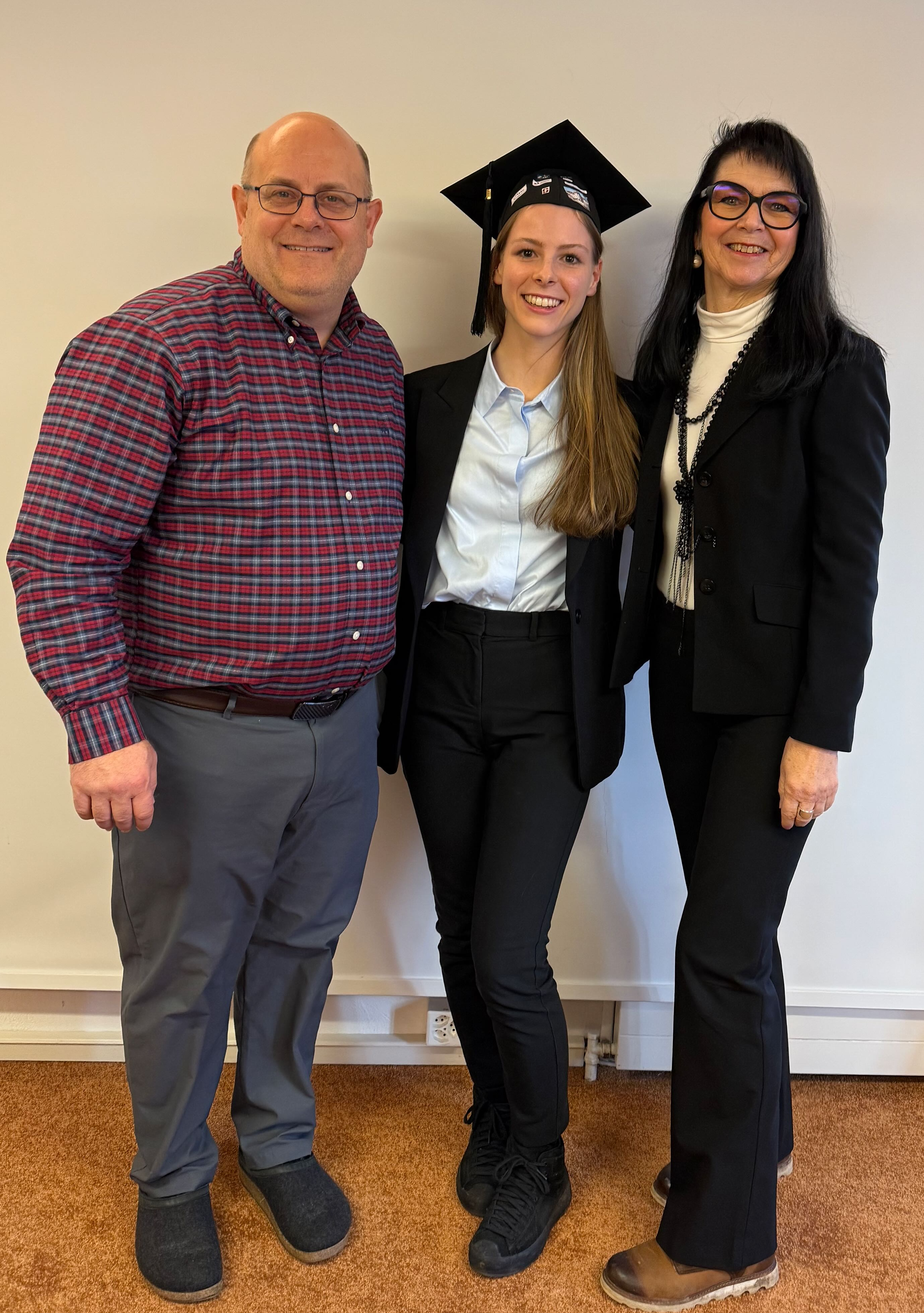
Her dissertation is titled "Bridging knowledge gaps: From immigrant integration to organizational innovation".
In her thesis, she investigates two key challenges in increasingly diverse labor markets: (1) how skills training can improve the labor market integration of immigrants and refugees, and (2) how firms can leverage diverse knowledge within teams to foster innovation. First, she studies the role of dual training, combining occupational and workplace-based cultural skills, in supporting young immigrants’ transition into the labor market. Second, she analyzes the effectiveness of comprehensive IT and coding programs in improving refugees’ labor market integration. Third, she examines whether strategies that increase knowledge diversity within teams improve innovativeness and how this relationship varies across teams’ technology contexts.
In the first part of her dissertation, she examines for adolescent immigrants whether training in workplace-based cultural skills—i.e., tacit knowledge about host-country workplace norms and labor market institutions—provides added value beyond training in occupational skills in the transition from education to work. Exploiting the Swiss vocational education and training (VET) system, she compares “dual VET programs” with firm-based training complemented by vocational schooling to “purely school-based VET programs”. While national curricula ensure identical occupational skills in both programs, workplace-based cultural skills are primarily acquired in dual VET. Using exogenous variation in travel distances to school-based VET providers, she finds that completing dual VET reduces unemployment risks at labor market entry for young immigrants from developing countries. Her findings highlight the decisive role of dual training with a substantive in-firm practical training part in early integration (get Working Paper).
In the second part of her dissertation, she examines for adult refugees whether comprehensive training programs with a dual component, i.e., a combination of IT and coding skills with workplace-based cultural skills improve adult refugees’ labor market integration. Using a quasi-experimental design and detailed application and survey data, she evaluates an IT and coding bootcamp by Powercoders, including internships in IT firms and individual coaching. She finds substantially better labor market and social integration outcomes for participants than for comparable non-participants within the first three years after graduation. She also reports suggestive evidence that workplace-based cultural skills training could be one key mechanism. Benchmarking the magnitude of the employment gains indicates that the program accelerates refugees’ labor market integration by the equivalent of six years of host-country experience (get Working Paper).
In the third part of her dissertation, she shifts the focus from individual level skill use to team level skill exploitation in firms. She examines the conditions under which strategies that increase teams’ knowledge exchange improve team innovativeness. She focuses on team boundary spanning, i.e., when teams create connections across internal or external firm boundaries. However, as boundary spanning also introduces coordination costs, it is unclear if its net effect on innovativeness is positive given for example different technology contexts in which teams operate. Using German team-level data, she therefore studies distinct technology portfolios at the team level and shows that the boundary spanning–innovativeness link strongly varies across technology contexts. Thus, managers in general or HRM specialists in particular should carefully align boundary-spanning strategies with teams’ technology use (get Working Paper).